
Mosaic Tile Formats and Materials We Work With
Mosaic tiling covers a wide range of materials, and each one comes with its own cutting, adhesive, and grouting requirements. Knowing the difference between them is part of doing the job properly.
Glass mosaic tiles are the most common format for bathroom feature walls and shower niches. They reflect light well, come in a wide colour range, and need careful handling during cutting since glass chips can shatter or chip at the edges if rushed.
Ceramic and porcelain mosaic tiles suit floors and wet areas where durability and slip resistance matter most. They hold up well underfoot and across high-moisture zones like shower bases.
Natural stone mosaics — including marble, travertine, and slate — come in various chip sizes and finishes, from polished to tumbled. Stone is porous, which changes how it needs to be treated before grouting even begins.
Mixed material mosaics combine glass, stone, and metal elements within the one sheet, often used for statement feature walls where contrast and texture do the talking.
• Glass mosaic — feature walls, niches, splashbacks
• Ceramic and porcelain — floors, wet areas, durability-focused spaces
• Natural stone — marble, travertine, slate, various chip sizes
• Mixed material — glass, stone, and metal combined for texture and contrast
Working across this full range is what separates genuine mosaic experience from a generalist tiling job.

Where Mosaic Tiling Works Best
Mosaic tiling suits more spaces than most homeowners realise, and each application has its own reason for using the small-format tile in the first place.
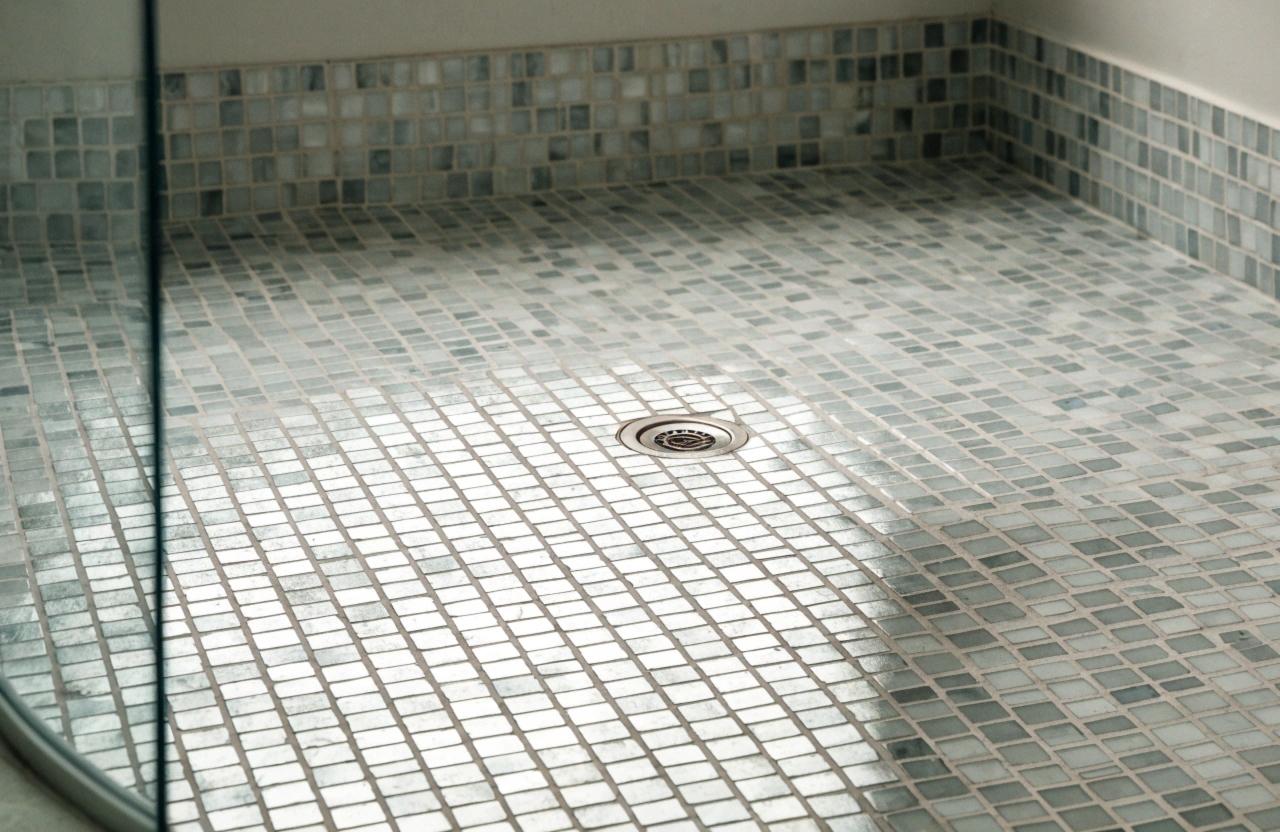
Shower floors are one of the most common applications. The small tile format gives natural slip resistance underfoot, and the grout lines follow the floor gradient down to the drain — something larger format tiles simply cannot achieve on a sloped surface.
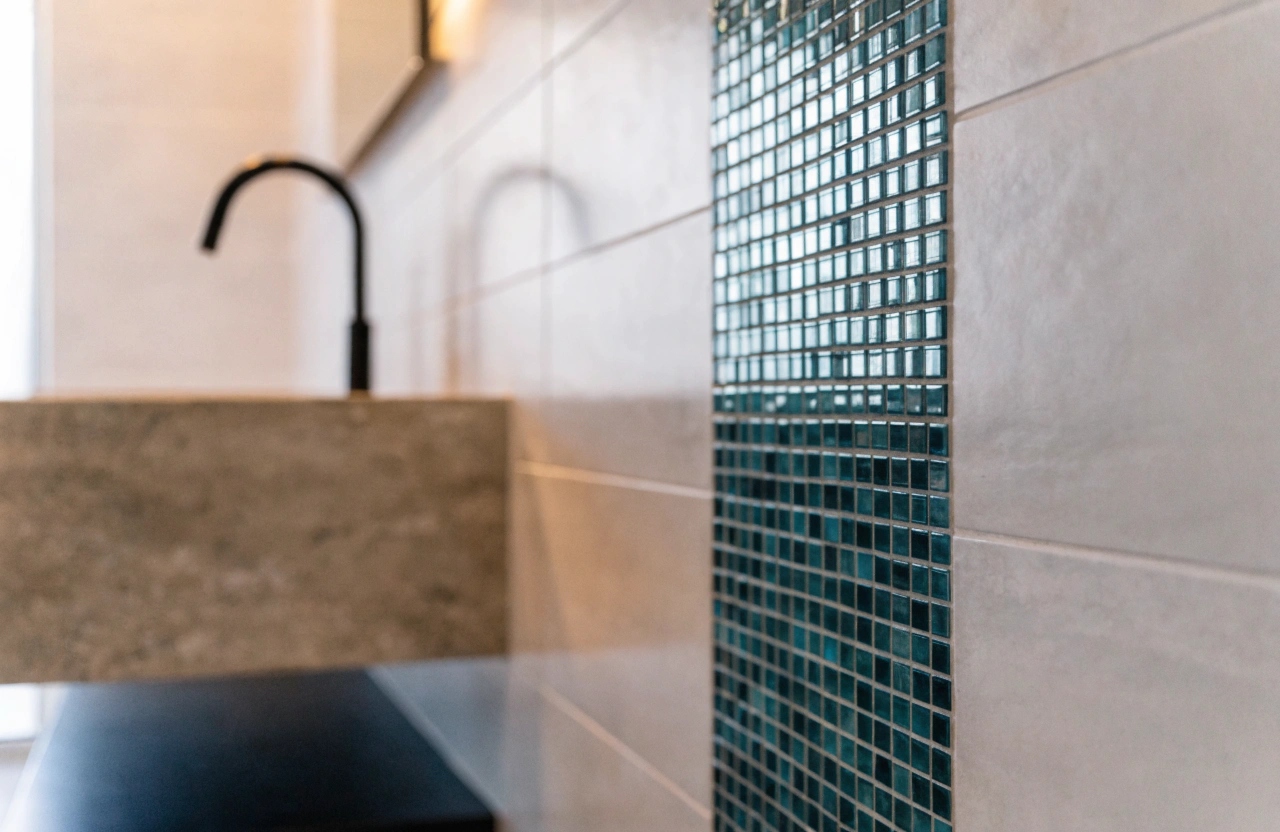
Feature walls and accent strips in bathrooms create a focal point against larger surrounding tiles. A mosaic band running through a shower wall, or a full mosaic feature wall behind a vanity, adds depth and visual interest without overwhelming the space.
Kitchen splashbacks benefit from glass mosaic in particular, where the reflective surface adds colour and brightness to a high-use area of the home.
Pool surrounds and water features rely on glass mosaic as the standard finish material, chosen for its durability in constant water exposure and the way it catches light across the surface.
Outdoor entertaining areas use mosaic detailing to lift otherwise plain tiled surfaces — a feature strip along an outdoor bar, step edge, or alfresco wall.
• Shower floors — slip resistance, gradient-following grout lines
• Feature walls and accent strips — bathroom focal points
• Kitchen splashbacks — colour and reflectivity
• Pool surrounds and water features — durability in constant moisture
• Outdoor entertaining areas — visual detail on plain surfaces
Mosaic Tiling Trends and Styles in Wollongong Homes
Mosaic offers more design range than most homeowners expect, and the styles working best in Wollongong tend to follow the coastal character of the area without leaning into anything too literal or themed.
Soft blue and grey-blue tones are the most requested shade range for bathrooms and shower floors right now, picking up a coastal palette without going full “nautical” with shells or anchors. It reads as calm and current, and sits well against the white or off-white field tile most homeowners are still choosing for surrounding walls and floors.
Matte and textured finishes have moved ahead of high-gloss glass in recent feature wall requests. A matte chip gives a more grounded, tactile feel and doesn’t show water spotting the way a glossy surface can in a busy family bathroom.
Mixed material mosaics with a small metallic element, usually brushed brass or bronze flecks through a glass or stone base, are showing up more in kitchen splashbacks where homeowners want warmth and shine without a full metallic tile.
Large-format field tile paired with a narrow mosaic border remains the most requested combination overall, giving the low-maintenance benefit of large tile with a genuine mosaic feature where it counts.
• Soft blue and grey-blue tones — coastal feel without literal beach themes
• Matte and textured chips — tactile finish, less visible water spotting
• Brushed brass or bronze flecks — warmth in kitchen splashbacks
• Large-format tile with a mosaic border — the most requested combination
None of this changes the technical demands. A matte chip still needs the same back-buttering and joint consistency as a glossy one.
The Technical Demands of Mosaic Tiling
Mosaic tiling carries technical requirements that simply don’t apply to larger format tiles, and skipping any one of them shows up in the finished surface.
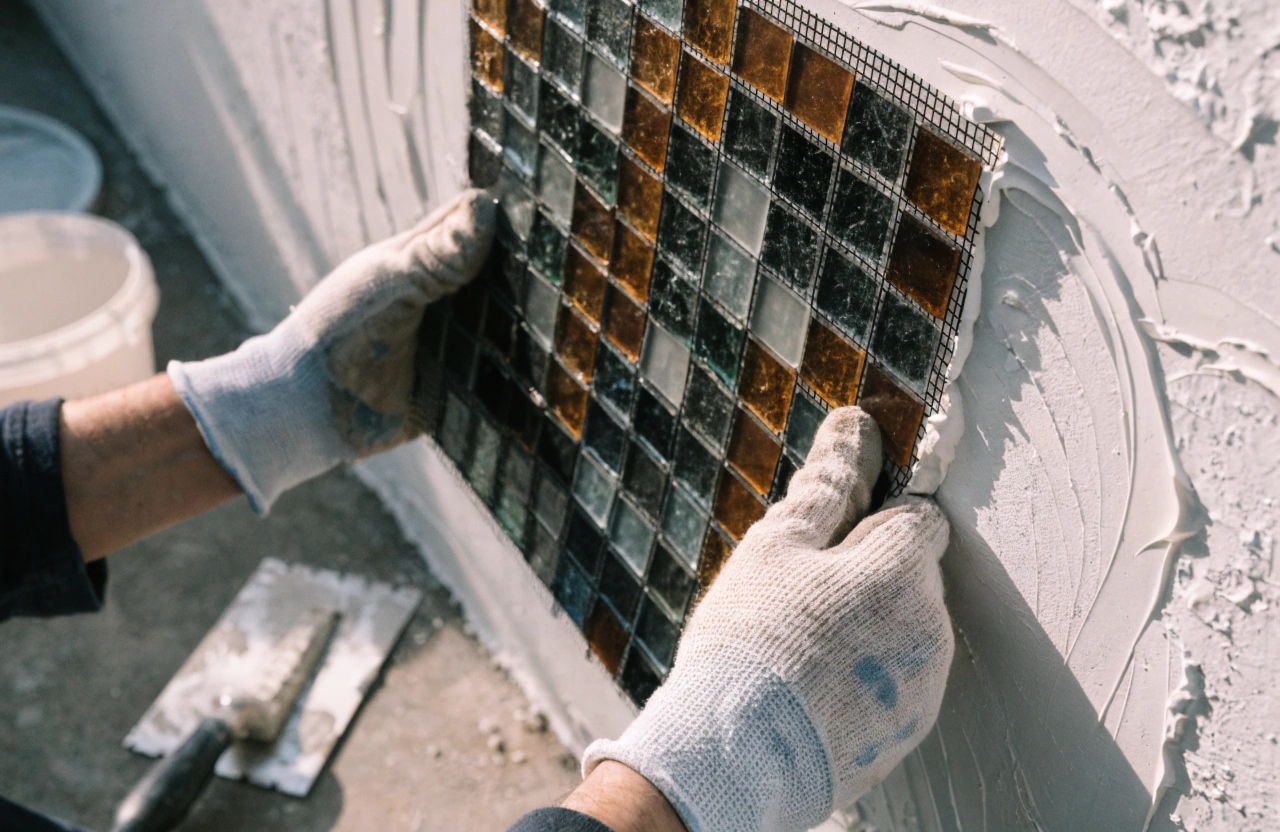
Mosaic tiles arrive on mesh backing sheets that must be laid in precise alignment. Sheet-to-sheet joint consistency is critical here — any variation in the gap between sheets becomes immediately visible once the installation is complete, particularly across a feature wall or large floor area where the eye naturally follows the grout lines.
Back-buttering each mesh sheet is non-negotiable. This means applying adhesive directly to the back of the sheet as well as the substrate, achieving full coverage behind every individual chip rather than relying on adhesive squeezing up through the mesh gaps alone. Without this step, chips can sit hollow and crack under pressure over time.
Cutting mosaic sheets to fit curved surfaces or irregular perimeters — around niches, pipe penetrations, or rounded shower hobs — takes a steady hand and patience, since the small chip size makes precise cuts more demanding than cutting a single large tile.
Grouting mosaic surfaces requires filling every joint completely without smearing grout across textured or uneven chip faces, which takes longer than grouting large format tiles.
Natural stone mosaics need pre-sealing before grouting begins, since the porous surface will absorb grout colour and stain permanently if sealed too late or not at all.
Layout Planning for Mosaic Feature Walls
A mosaic feature wall needs to be planned before a single tile goes up, not worked out on the fly once the surrounding tiling is finished.
The mosaic section has to be considered in relation to the larger format tiles around it. The pattern needs to sit centred within the wall or niche, and the border where mosaic meets field tile has to read as clean and intentional rather than mismatched or off-balance. This means measuring the full wall, working out where the mosaic band or panel will land, and adjusting cuts on the surrounding tiles to accommodate it — not the other way around.
We integrate mosaic elements into the overall tiling layout plan from the start, rather than treating the mosaic as an afterthought bolted on once the main tiling is already done. That early planning is what stops a feature wall from looking like two separate jobs stitched together.
• Mosaic section measured and centred within the full wall or niche
• Border between mosaic and field tile planned for a clean, consistent line
• Surrounding tile cuts adjusted around the mosaic placement, not the reverse
• Mosaic treated as part of the layout plan from day one, not added in afterward
Getting this sequence right is what makes a feature wall look considered rather than improvised.
Mosaic Tiling Maintenance
Mosaic installations carry a much higher grout-to-tile ratio than large format tiling, particularly on shower floors where hundreds of small chips mean hundreds of joints. That density means grout maintenance needs more attention over the life of the surface than a standard tiled wall or floor would.
Epoxy grout is the better choice for wet area mosaics. It resists staining and moisture penetration far better than standard cement-based grout, which matters given how much grout surface area a mosaic installation actually has.
Where cement grout is used, sealing becomes part of the job rather than an optional extra. The same applies to natural stone mosaic surfaces, which need sealing to protect the stone itself from moisture and staining over time.
Routine cleaning matters more with mosaic than with larger tiles, simply because there’s more grout exposed to soap scum, body oils, and general bathroom or kitchen grime. Left unchecked, that grout can discolour well before the tiles themselves show any wear.
• Higher grout-to-tile ratio means more joints to maintain
• Epoxy grout recommended for wet area mosaic installations
• Cement grout and natural stone surfaces both require sealing
• Routine cleaning prevents grout discolouration over time
Thinking about maintenance at installation stage is part of getting a mosaic surface to last.
Frequently Asked Questions
Mosaic uses small individual chips on mesh backing sheets rather than single large tiles. The format demands more precise alignment, more grouting, and more careful handling, making it a far more labour-intensive process than standard tiling work.
Bathrooms are the most common application, particularly shower floors, niches, and feature walls. Kitchens benefit from glass mosaic splashbacks, and outdoor areas including pool surrounds and entertaining spaces also suit mosaic detailing well.
The small chip format provides natural slip resistance underfoot, and the dense grout lines can follow the floor gradient down to the drain, something larger format tiles cannot achieve on a sloped surface.
Yes. Natural stone is porous and needs pre-sealing before grouting begins, otherwise the grout colour can stain the stone permanently during installation.
Mosaic has a much higher grout-to-tile ratio, so maintenance matters more. Epoxy grout suits wet areas best, and both cement grout and natural stone surfaces benefit from sealing to prevent discolouration over time.
Yes. Mosaic sheets can be cut to wrap around niches, pipe penetrations, and rounded shower hobs, though this takes a steady hand given the small chip size involved.
Yes. Planning the mosaic placement against the surrounding large format tiles beforehand keeps the border clean and the pattern centred, rather than treating it as an afterthought once the main tiling is finished.
Get Mosaic Tiling Done Right in Wollongong
Mosaic tiling Wollongong homeowners can rely on comes down to experience across every format and material — glass, ceramic, porcelain, natural stone, and mixed material mosaics — applied with the precise sheet alignment and joint consistency this format demands. We bring that same level of attention to homes across Thirroul, Austinmer, Corrimal, Bulli, Shellharbour, and the wider Illawarra region, covering wet area compliance where it applies and a patient, detail-oriented approach from the first measurement to the final grout line.
Whether the project is a shower floor, a feature wall, a kitchen splashback, or a pool surround, the result only holds up if the planning and execution are right from the start. We integrate mosaic into the overall layout plan rather than bolting it on as an afterthought, and we treat grout selection and sealing as part of the job, not a step skipped to save time.
Get in touch for a free consultation and quote on mosaic tiling for your Wollongong or Illawarra home.
Mosaic tiling done with genuine precision is one of the most distinctive finishes available in any bathroom or renovation — and it deserves a tiler who treats every chip as part of the whole.
