
How do you level a floor before tiling?
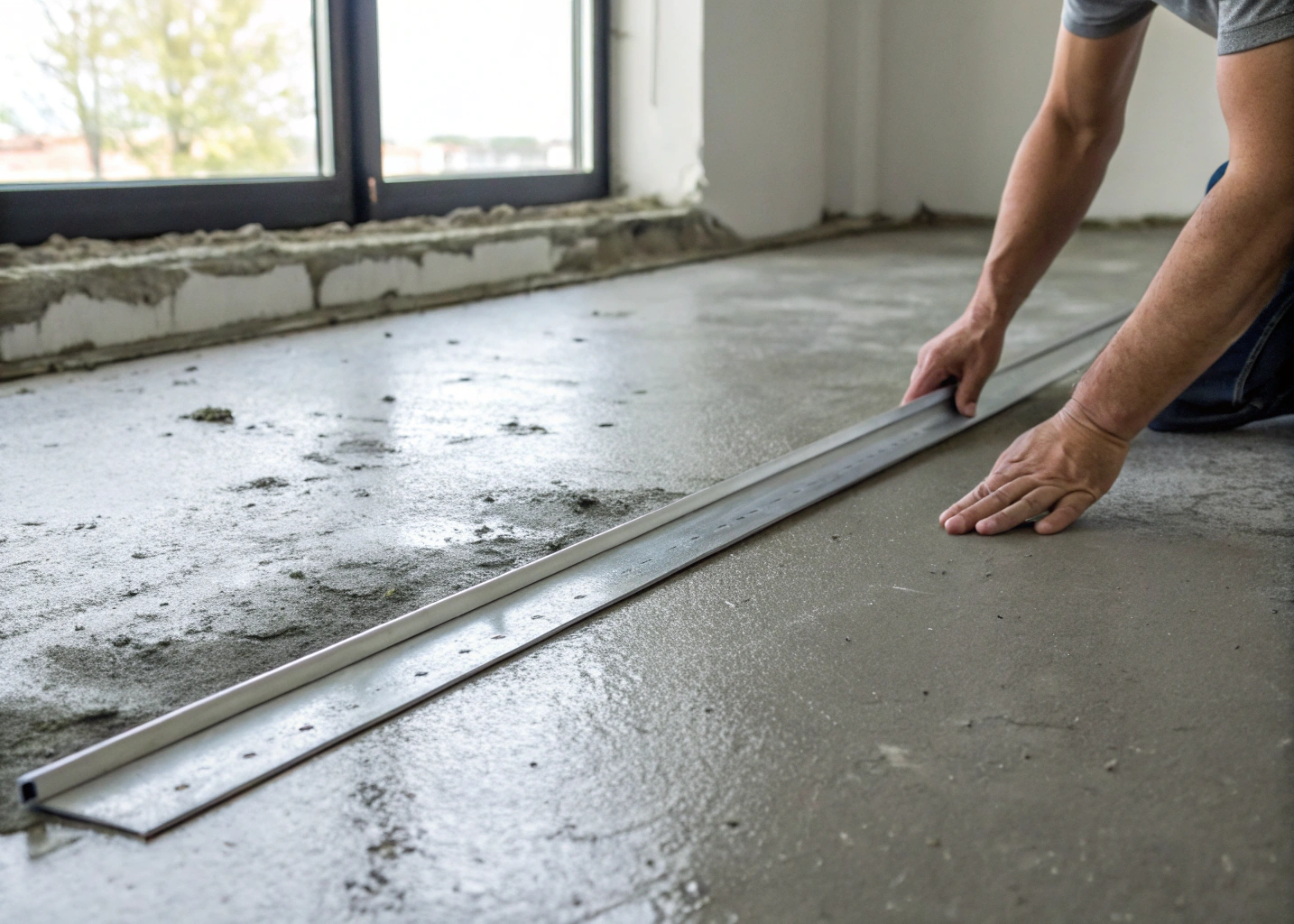
Floor levelling before tiling involves assessing the substrate, correcting high points by grinding and low points with self-levelling compound or screed, and achieving the flatness tolerance required under AS 3958 before any tile adhesive is applied.
The professional process runs in this sequence:
- Substrate assessment — identify high and low points using a straightedge; confirm the flatness tolerance required for the tile format specified
- Subfloor preparation — clean the surface, seal penetrations, treat cracks and previous fixings
- Prime the substrate — apply a substrate-appropriate primer to make sure the compound bonds correctly
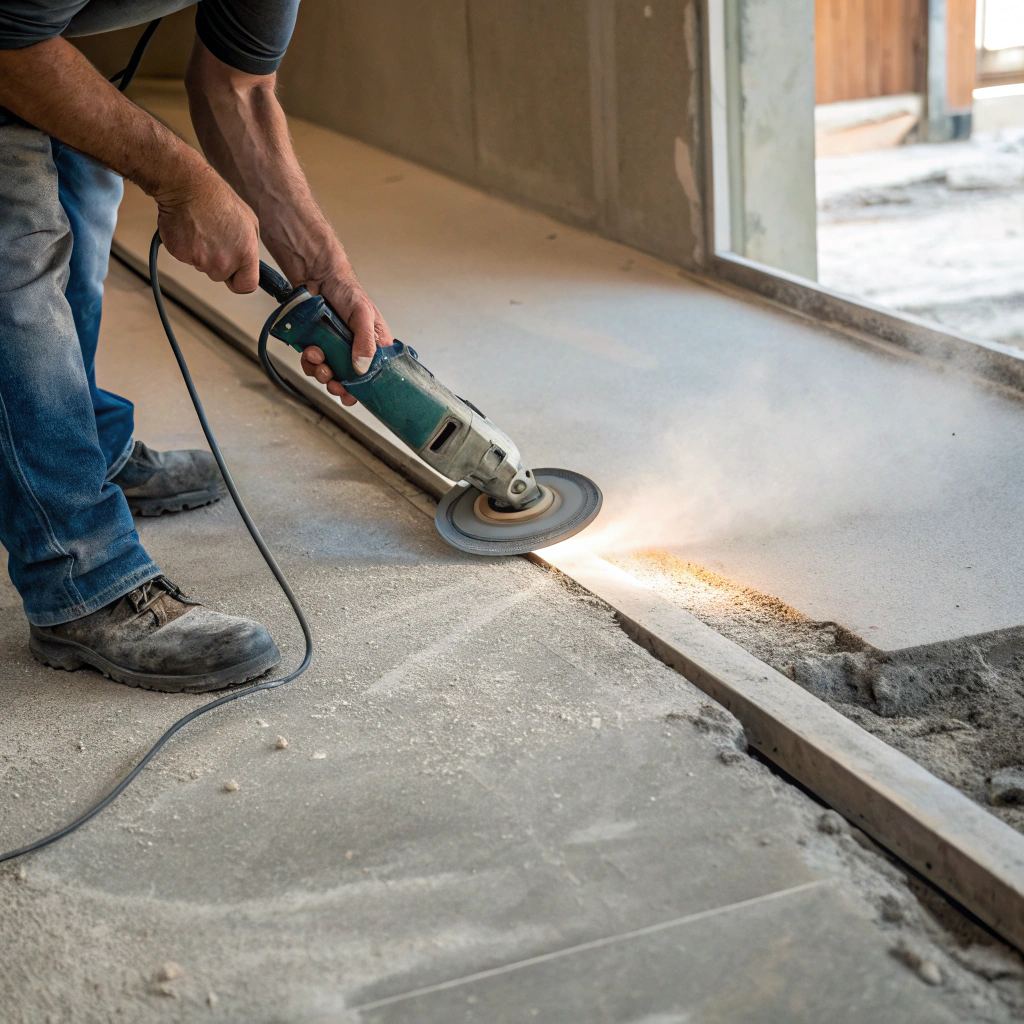
- Grind high points — use an angle grinder or floor grinder where localised ridges exceed tolerance
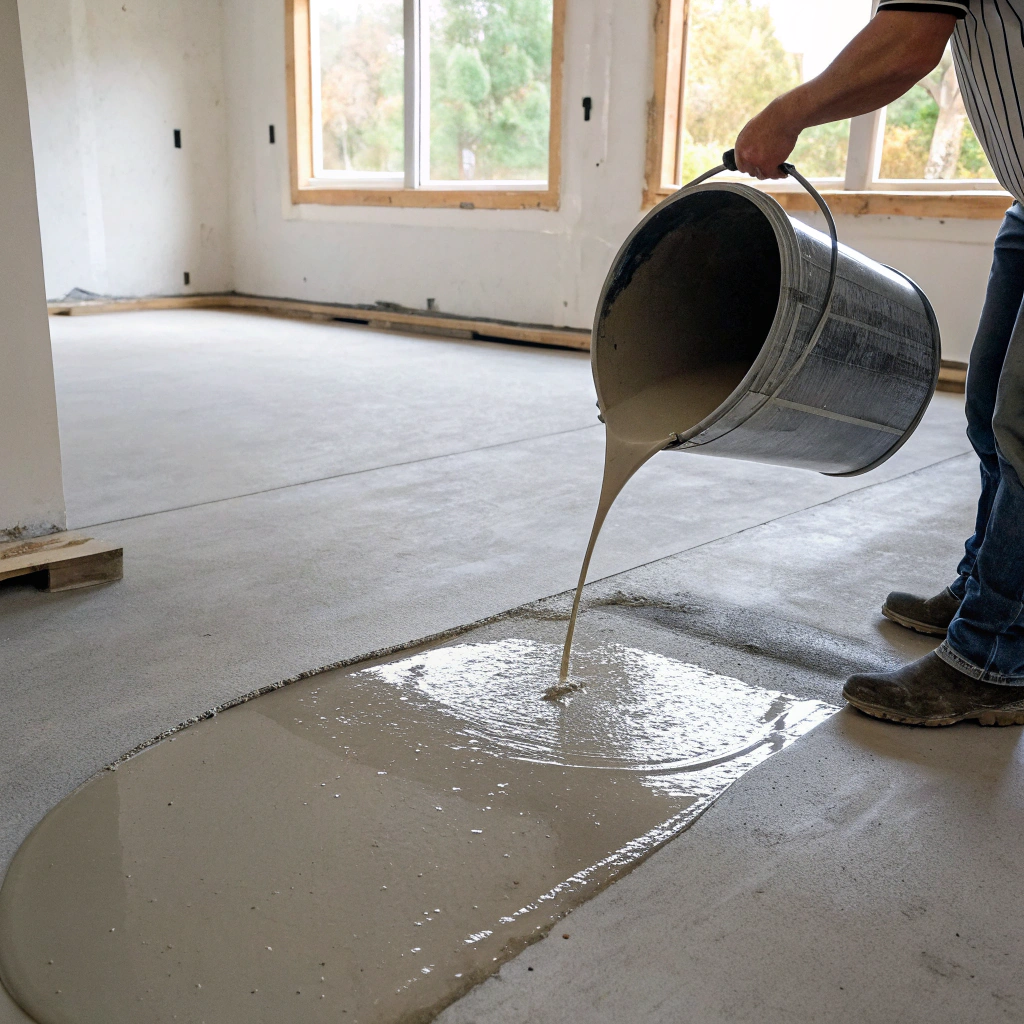
- Apply self-levelling compound — mix, pour, and gauge into low areas; allow to cure before tiling commences
- Final check — re-test flatness with a straightedge against AS 3958 tolerances before tiling proceeds
Professional floor levelling makes sure the substrate meets the minimum 3mm under 3 metre straightedge tolerance required for standard tiles — tighter for large format — before a single tile is laid.

Why Floor Levelling Is a Structural Requirement, Not a Preliminary Step
Floor levelling isn’t prep work you do to keep the tiler happy. It’s a structural requirement.
Flexible floor coverings — carpet, vinyl, cork — have enough give in them to bridge minor surface variation without issue. Tiles don’t. A ceramic or porcelain tile is completely rigid, and when it’s laid over a surface that dips or rises even a few millimetres, part of that tile sits in the air with nothing beneath it. Every time someone walks across that spot, the tile flexes under load. Do that enough times and it cracks — or the adhesive bond breaks and the tile goes hollow.
We treat floor levelling as a structural precondition, not a cosmetic step. Get the substrate right and everything that follows — adhesive, tiles, grout — has a solid foundation to hold to.
The Flatness Standard Your Tiled Floor Must Meet
The Australian standard for tiled floors is AS 3958. It sets a minimum flatness tolerance of 3mm under a 3 metre straightedge for standard tiles — and that’s the compliance minimum, not a suggestion.
Large format tiles are less forgiving. The bigger the tile, the tighter the tolerance, because a larger tile spans more floor and is more likely to bridge a dip and crack under load.
| Tile Format | Flatness Tolerance |
|---|---|
| Standard tiles | 3mm under 3m straightedge |
| Large format tiles | Tighter — confirm with tiler |
| Mosaics | Sound substrate required |
Lippage — where one tile edge sits higher than the one next to it — is almost always a substrate preparation problem. Getting the floor flat before tiling is what prevents it.
Floor Levelling Methods: Matching the Right Approach to Your Substrate
Method selection is substrate-driven — there’s no single solution that works across every floor type.
Self-Levelling Compound: The most common solution for filling low points. We prime the substrate first, then pour and gauge compound into low areas. Product selection matters — different compounds suit different substrates and environments.
Grinding High Points: Where the floor has localised ridges or raised construction joints, we grind them back. We use an angle grinder for smaller spots or a floor grinder for larger sections — removing just enough to bring the high point within tolerance.
Patching and Crack Repair: Untreated cracks telegraph straight through compound and up through the tile above. Crack repair is part of the levelling process, not an afterthought.
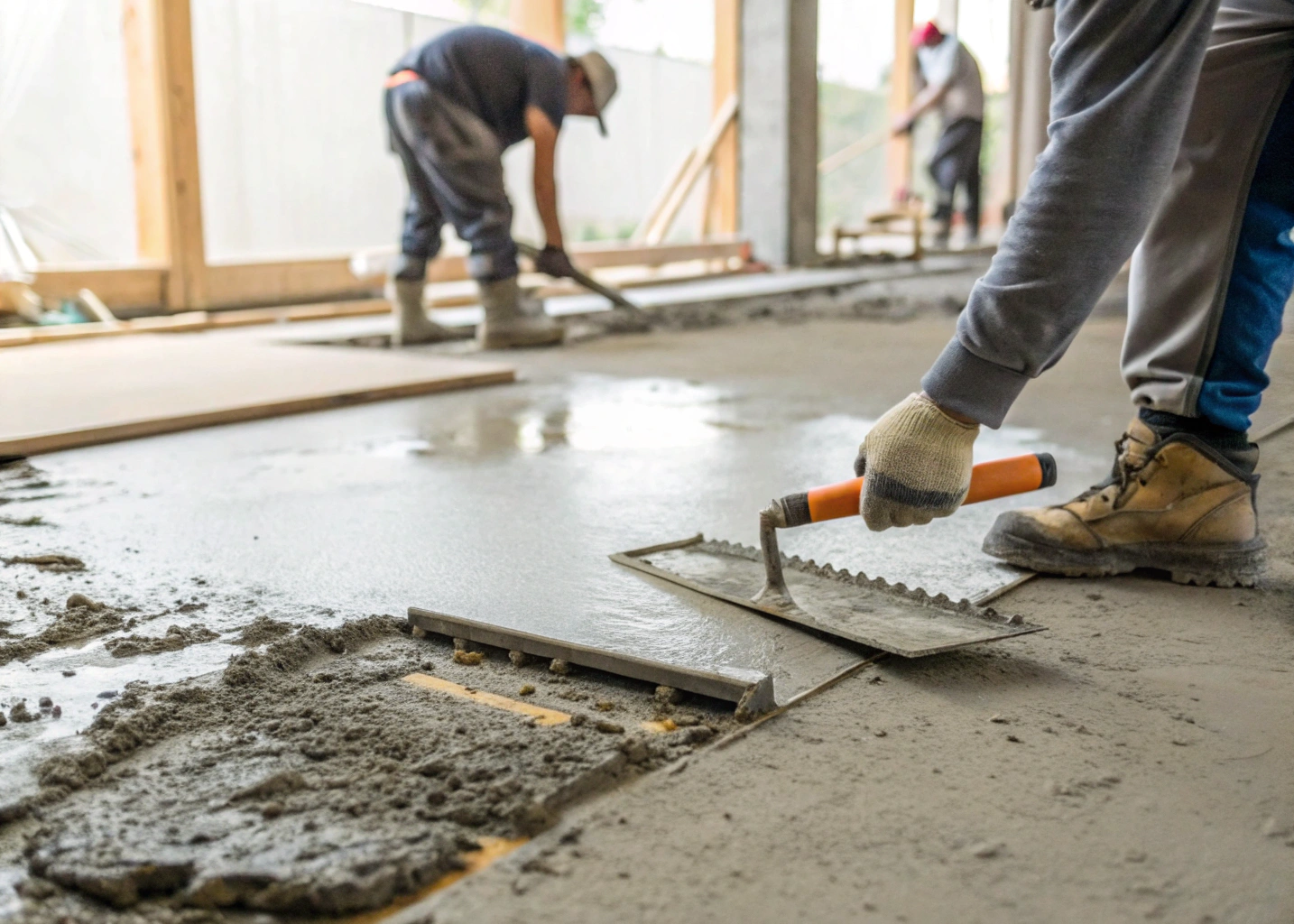
Screed: Where variation runs across the whole floor rather than isolated spots, screed is the right call — most common in new construction or major renovations.
Substrate-Specific Requirements in Wollongong Homes
Levelling method suited to a concrete slab will not perform correctly on a flexing timber subfloor — substrate type drives every decision we make.
Concrete Slabs: Most of Wollongong’s post-war and fibro-era homes sit on concrete slabs that have seen decades of movement, patch repairs, and construction joints. We assess the full slab condition before treatment — existing patches, joint edges, and surface contamination all affect how levelling compound bonds and performs.
Timber Subfloors: Flex has to be eliminated before any compound goes down. Self-levelling compound over a flexing timber floor will crack regardless of how well it’s applied — the movement breaks the bond. We address the structural flex first, then level.
Fibre Cement: Sheet joints need specific treatment, deflection limits have to be within range, and the compound used has to be compatible with fibre cement. Using the wrong product here causes delamination and compound failure before the tiles ever go down.
Moisture Testing Before Levelling and Tiling
Moisture is a problem that’s easy to miss and expensive to deal with after the fact.
Ground-bearing concrete slabs — which make up a large portion of Wollongong’s housing stock — transmit moisture vapour up through the slab from the ground beneath. That moisture has nowhere to go once tiles and adhesive are laid over the top of it, and if the levels are high enough, it breaks down the adhesive bond over time.
We test moisture vapour transmission before levelling and tiling commences. Where readings exceed the adhesive manufacturer’s limits, we treat the slab with an appropriate moisture barrier before any compound or adhesive goes down. Skipping this step is one of the more common reasons tiled floors fail in older Wollongong homes — and it’s a failure that only shows up well after the job is finished.
How Floor Levelling Fits Into Your Renovation Sequence
Getting the sequence right prevents costly rework and delays to other trades. Floor levelling sits at a specific point in the renovation order — get it wrong and you’re pulling work apart before the job’s even finished.
- Plumbing and electrical rough-in complete — all subfloor penetrations sealed before levelling commences
- Levelling and substrate preparation — grinding, crack repair, priming, and compound application completed across the full floor area
- Compound cure time observed — don’t rush this; tiling over uncured compound causes bond failure
- Cabinetry installation after tiling — where kickboards will sit on finished tile, cabinets go in after the floor is done, not before
Trades that arrive out of sequence create problems that cost more to fix than they would have to avoid. We work with your renovation timeline to make sure floor levelling happens at the right point — not as an afterthought when the tiler is already on site.
Wollongong and Illawarra Suburbs We Service
We carry out floor levelling and substrate preparation across Wollongong and the wider Illawarra region. Our team works across the full area — from Fairy Meadow, Corrimal, and Thirroul on the northern end, through Figtree, Keiraville, and Mount Ousley in the middle suburbs, down to Unanderra, Dapto, Port Kembla, and Warrawong in the south. We also service Woonona, Bulli, and surrounding coastal and inland suburbs throughout the Illawarra.
Whether it’s a single bathroom floor or a full renovation across multiple rooms, we assess the substrate, identify what’s needed, and get the floor ready for tiling — wherever you are in the region.
Frequently Asked Questions
Yes, in most cases. Tiles are rigid and won’t conform to an uneven surface. Any significant variation in the substrate will cause tiles to crack or go hollow under foot traffic. We assess every floor before tiling starts to confirm whether levelling is required and what method is appropriate.
Under AS 3958, the minimum tolerance for standard tiles is 3mm under a 3 metre straightedge. Large format tiles require a tighter tolerance. We test the floor against these standards before any tiling commences.
It depends on the product and conditions, but most compounds are ready for tiling within 24 hours. Some fast-set products cure sooner. We don’t rush this — tiling over uncured compound is one of the more common causes of adhesive bond failure.
Yes, but the flex has to be addressed first. Applying levelling compound over a flexing timber floor will crack the compound regardless of application quality. We assess the structural movement, eliminate the flex, then apply compound once the floor is stable.
The most common cause is an uneven or poorly prepared substrate. Where a tile isn’t fully supported beneath, it flexes under load and eventually cracks. Moisture problems and uncured compound are also contributing factors. In most cases, cracked tiles point to a substrate preparation problem rather than a tile or adhesive failure.
Yes. Ground-bearing slabs transmit moisture vapour from below, and if levels are too high, the adhesive bond breaks down over time. We test before levelling and apply a moisture barrier treatment where readings exceed the adhesive manufacturer’s limits.
Self-levelling compound is poured into low areas to correct localised variation — it’s fluid and self-smoothing. Screed is applied across larger areas where variation runs across the whole floor. We select the right product based on the extent and nature of the variation we’re correcting.
Get a Free Floor Levelling Quote in Wollongong and the Illawarra
A properly levelled floor before tiling is always cheaper than repairing cracked and lifting tiles after the fact. We offer free floor assessments and levelling quotes across Wollongong and the Illawarra — no obligation, just a straight answer on what your substrate needs before tiling starts.
Our team is licensed, local, and familiar with the floor types found in Wollongong homes — from post-war concrete slabs through to timber subfloors and fibre cement sheeting.
Call Bathroom Renovations Wollongong today on 02 4003 6408 or use the contact form below to book your free assessment.
