
Floor Tile Replacement Across Wollongong and the Illawarra
We deliver floor tile replacement across Wollongong and the wider Illawarra region, working across all home types and substrate conditions the local housing stock presents. Whether the job is a partial replacement in a single wet area or a full retile across an open-plan living and kitchen floor, we cover it across suburbs including Thirroul, Corrimal, Bulli, Woonona, Fairy Meadow, Figtree, Keiraville, Dapto, Shellharbour, and Kiama.
The Illawarra housing stock ranges from post-war fibro and brick homes through to contemporary builds, and our approach is calibrated to the substrate conditions, construction era, and compliance requirements each property presents. Pre-1990 homes receive asbestos awareness protocols before any mechanical removal commences. Wet area replacements include waterproofing assessment and compliance as a standard component of the job. Every replacement floor — regardless of room type or suburb — is prepared, tiled, and finished to the same standard: one that outlasts and outperforms the floor it replaced.

The Design Opportunity in a Full Floor Retile
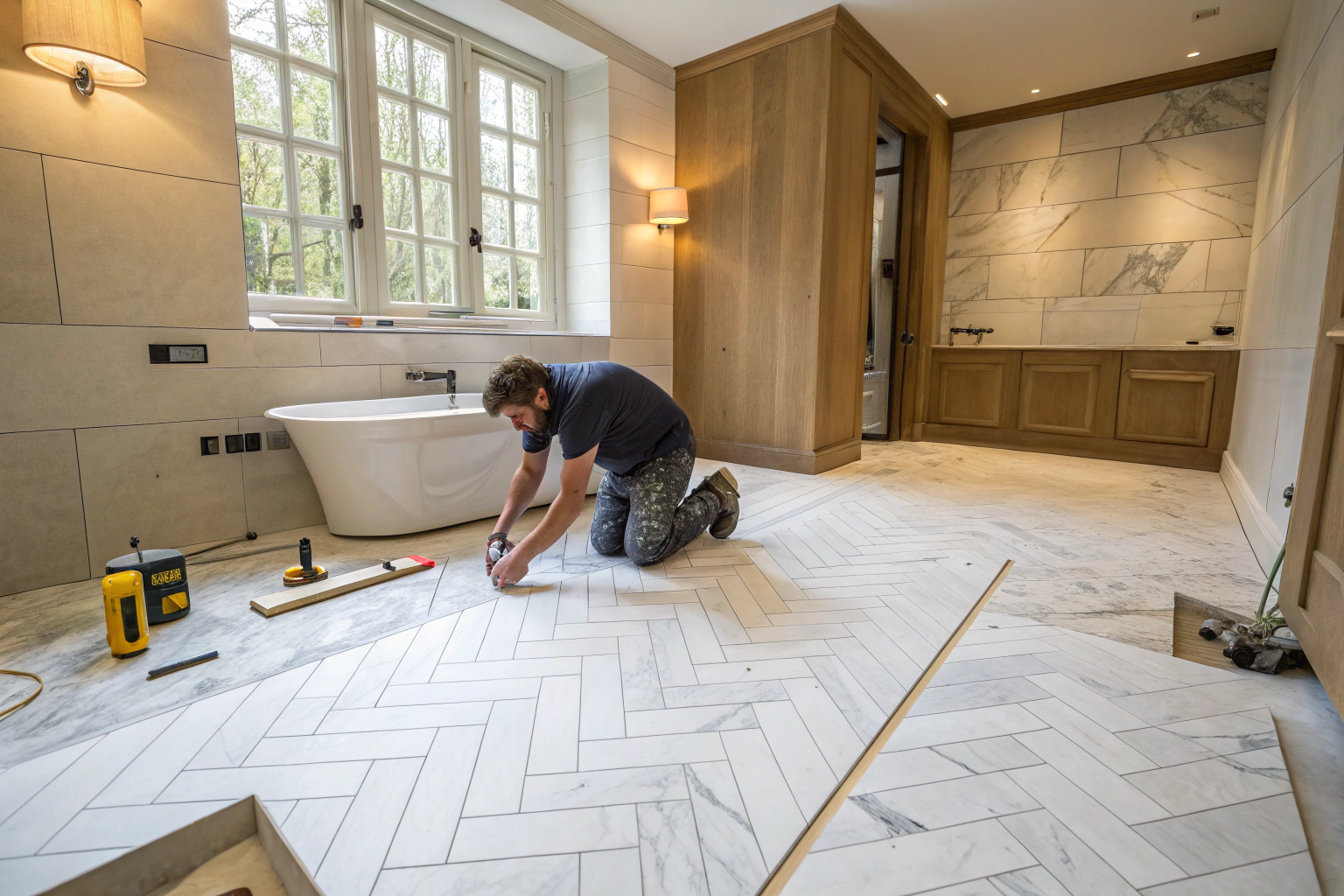
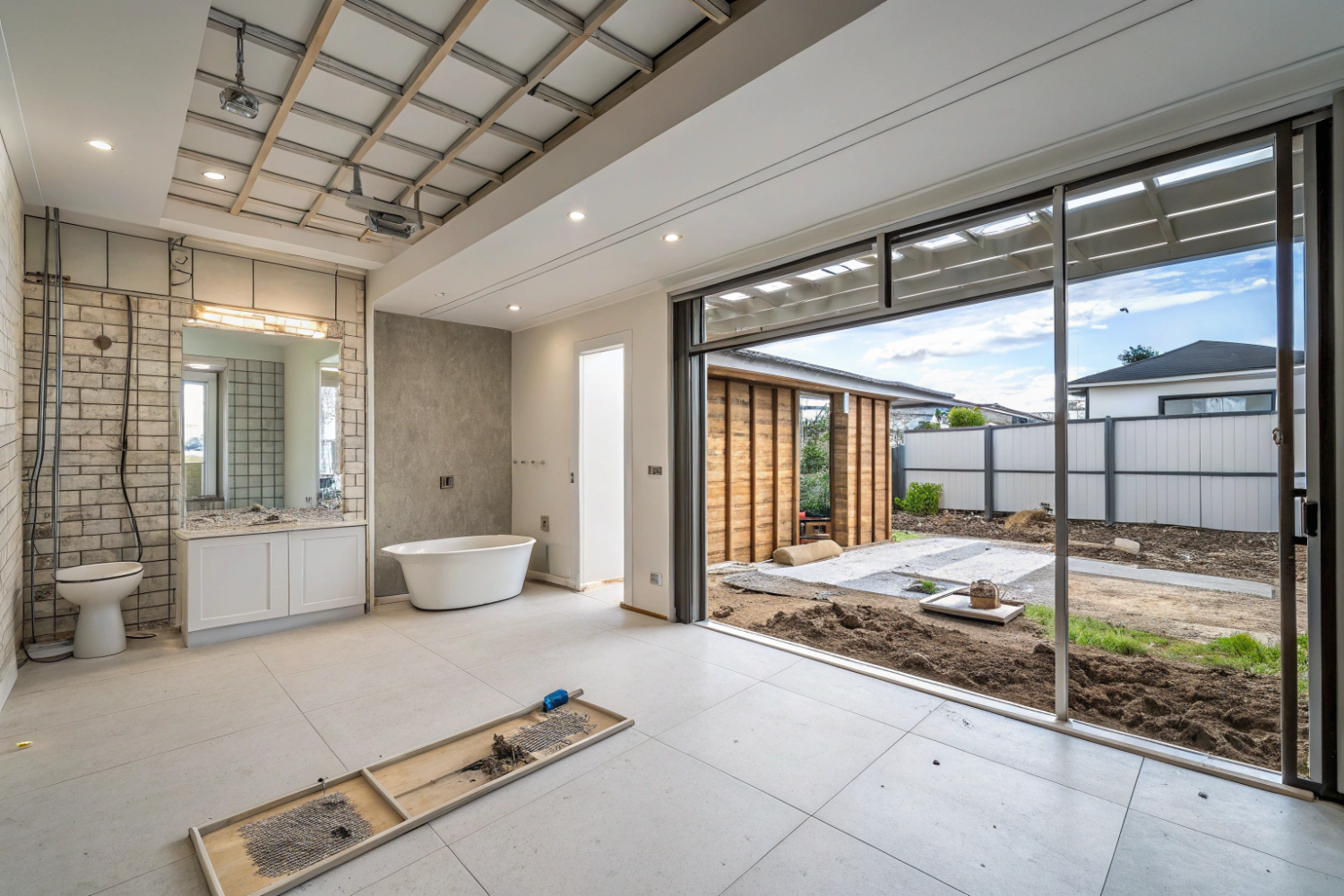
A full floor tile replacement is one of the most effective ways to shift the character of a room without touching a single wall or fixture. When the entire tile layer comes up, the floor becomes a blank canvas — and the tile selection made at that point has a significant impact on how the finished space looks and feels. Large-format tiles in a 600x600mm or 600x1200mm format can make a compact Illawarra bathroom or laundry feel considerably more open. Rectified tiles laid with minimal grout joints produce a cleaner, more contemporary finish. A shift in tile tone — from a dated beige or terracotta to a warm grey, stone-look, or matte white — can modernise a room that hasn’t changed in twenty years.
Laying pattern is another lever. A stacked layout, offset brick pattern, or diagonal lay each produces a distinctly different visual result from the same tile. We work through these decisions with homeowners during the quote and selection phase, so the replacement floor delivers both the functional outcome and the aesthetic upgrade the room deserves.
Tile Selection for Bathroom Floor Replacement
Selecting the right tile for a bathroom floor replacement involves more than aesthetics. The tile chosen needs to meet slip resistance requirements for wet areas — in NSW, bathroom floors require a minimum P4 slip rating for domestic wet areas, a compliance consideration that narrows the field before design preferences come into play. Tile format and thickness also matter practically — the replacement tile needs to sit at a height compatible with the existing floor level at the doorway threshold, and with any adjoining floor surface the bathroom connects to.
For full bathroom floor tiles, the selection process is also a genuine design opportunity. Large-format rectified tiles in a stone-look or matte finish can substantially modernise a dated Illawarra bathroom without any other changes to the room. Grout colour selection has an outsized effect on the finished result — a tone-matched grout produces a seamless, contemporary look while a contrasting grout defines the tile layout as a deliberate design feature. We work through every one of these decisions with homeowners before a single tile is ordered.
Slip Resistance Requirements for Bathroom Floor Tiles in NSW
Slip resistance is a compliance requirement for bathroom floor tiles in NSW, not a discretionary specification. Under AS 4586, wet area floor surfaces in domestic bathrooms must achieve a minimum P4 slip rating when tested in wet conditions. This applies to any new tile installation — including floor tile replacement — and is a standard we apply to every bathroom floor job we complete across Wollongong and the Illawarra.
The practical implication for tile selection is significant. Highly polished tiles, large-format glazed surfaces, and certain natural stone finishes frequently fall below the P4 threshold in wet conditions and are not suitable for bathroom floor use, regardless of how they look. Matte finishes, textured surfaces, and small-format mosaic tiles with higher grout-to-tile ratios typically perform well against the standard. We confirm the slip rating of every tile selected for a bathroom floor replacement before it is specified — so the finished floor is both compliant and built to perform safely for the life of the installation.
Grout Failure vs Tile Failure — Knowing the Difference
Not every deteriorating bathroom floor needs full tile replacement — but correctly identifying whether the problem lies in the grout or the tiles themselves is the step that determines what the right scope of work actually is. Grout failure presents as cracking, crumbling, discolouration, or missing grout between otherwise solid tiles. If the tiles beneath are intact, well-bonded, and produce a solid sound when tapped, grout replacement or regrouting may be the appropriate response rather than a full tile lift.
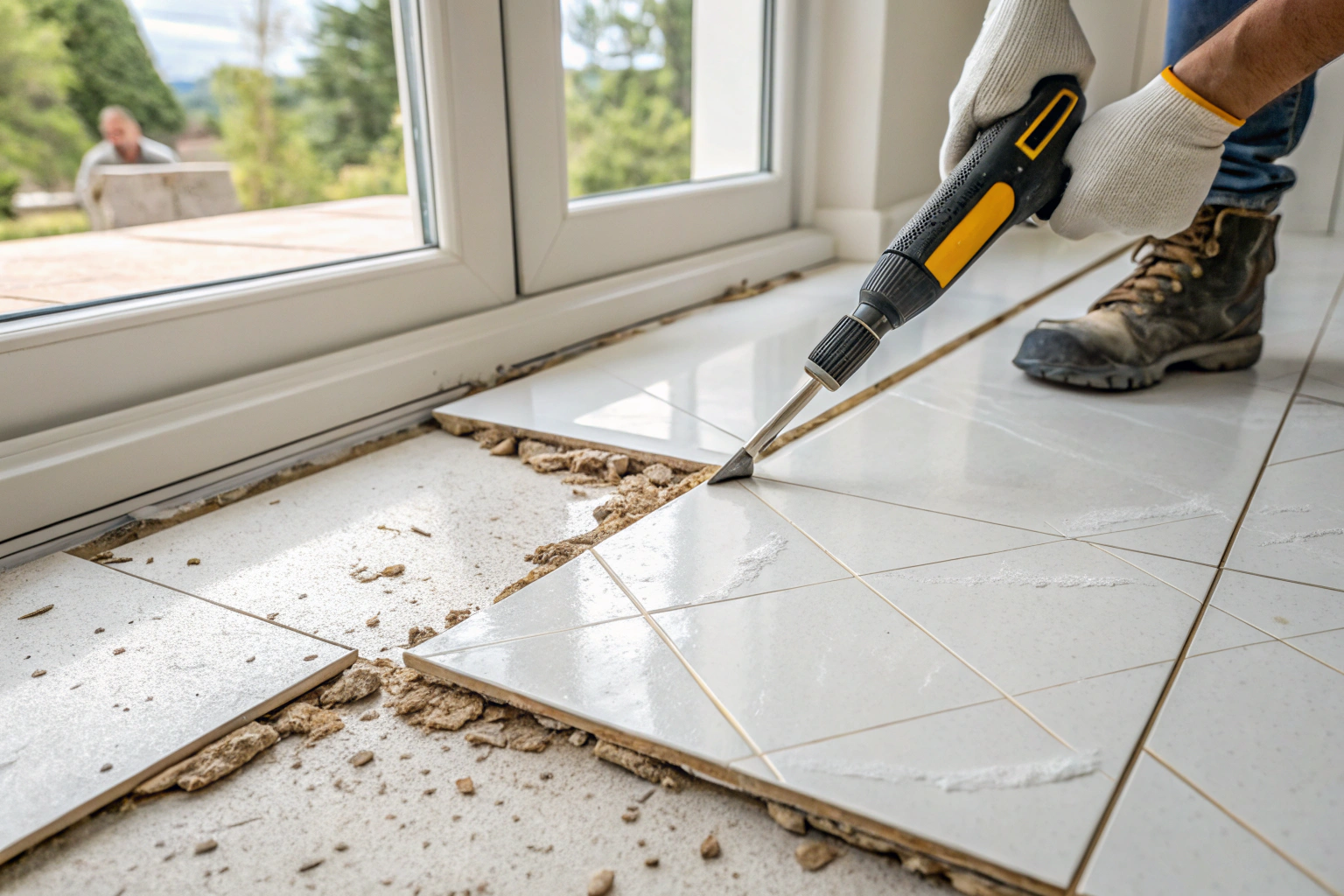
Tile failure is a different condition entirely. Tiles that produce a hollow sound when tapped have lost adhesive contact with the substrate beneath — they may appear visually intact but are no longer performing as a bonded floor surface. Cracked tiles, lifting edges, and tiles that move underfoot are all indicators that the adhesive bed has failed and replacement is the correct course of action. In wet areas, hollow tiles carry an additional risk — water tracking beneath a debonded tile works directly against the waterproofing membrane, accelerating substrate damage well beyond what is visible at the surface.
Why Substrate Preparation Determines How Long Your New Floor Lasts
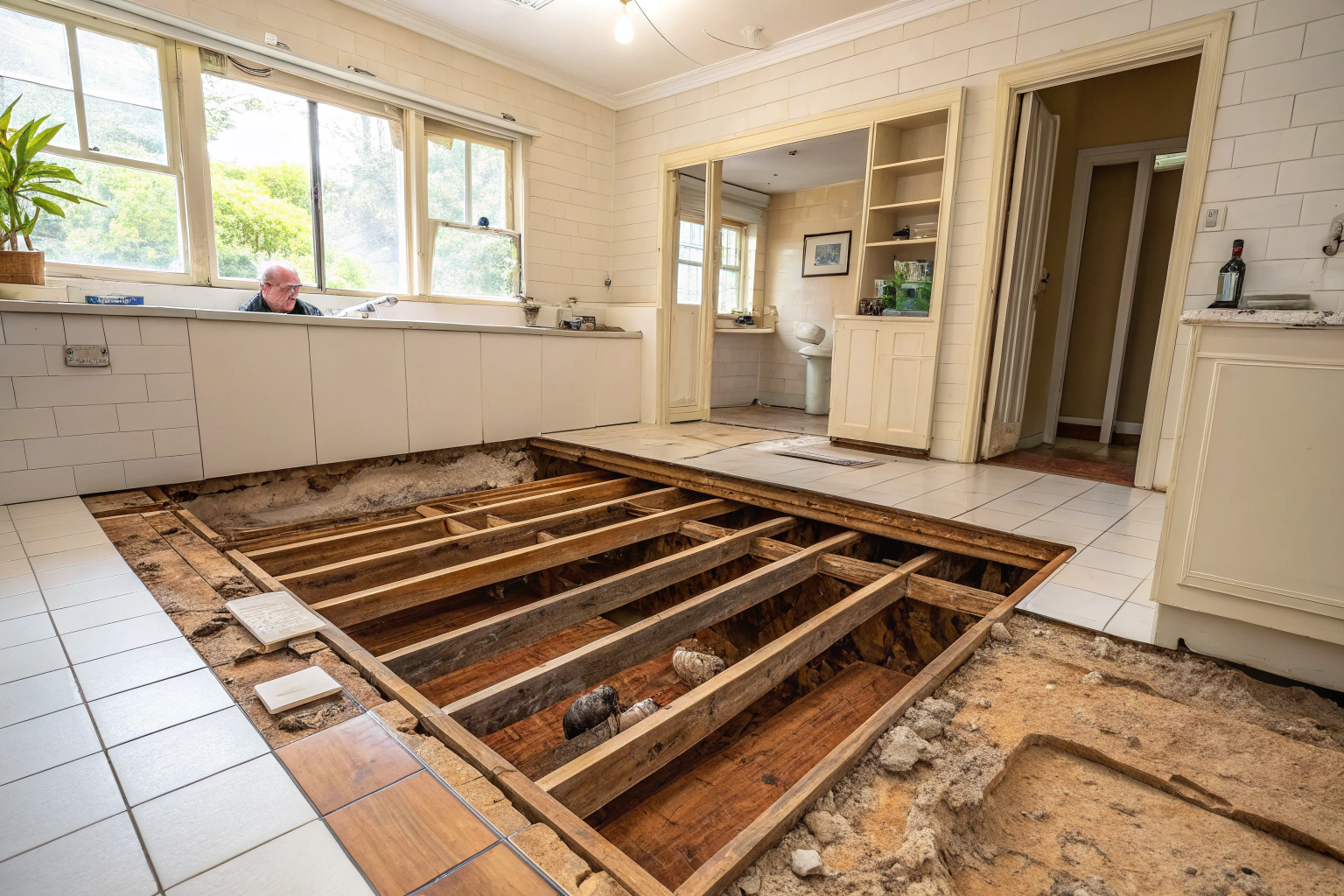
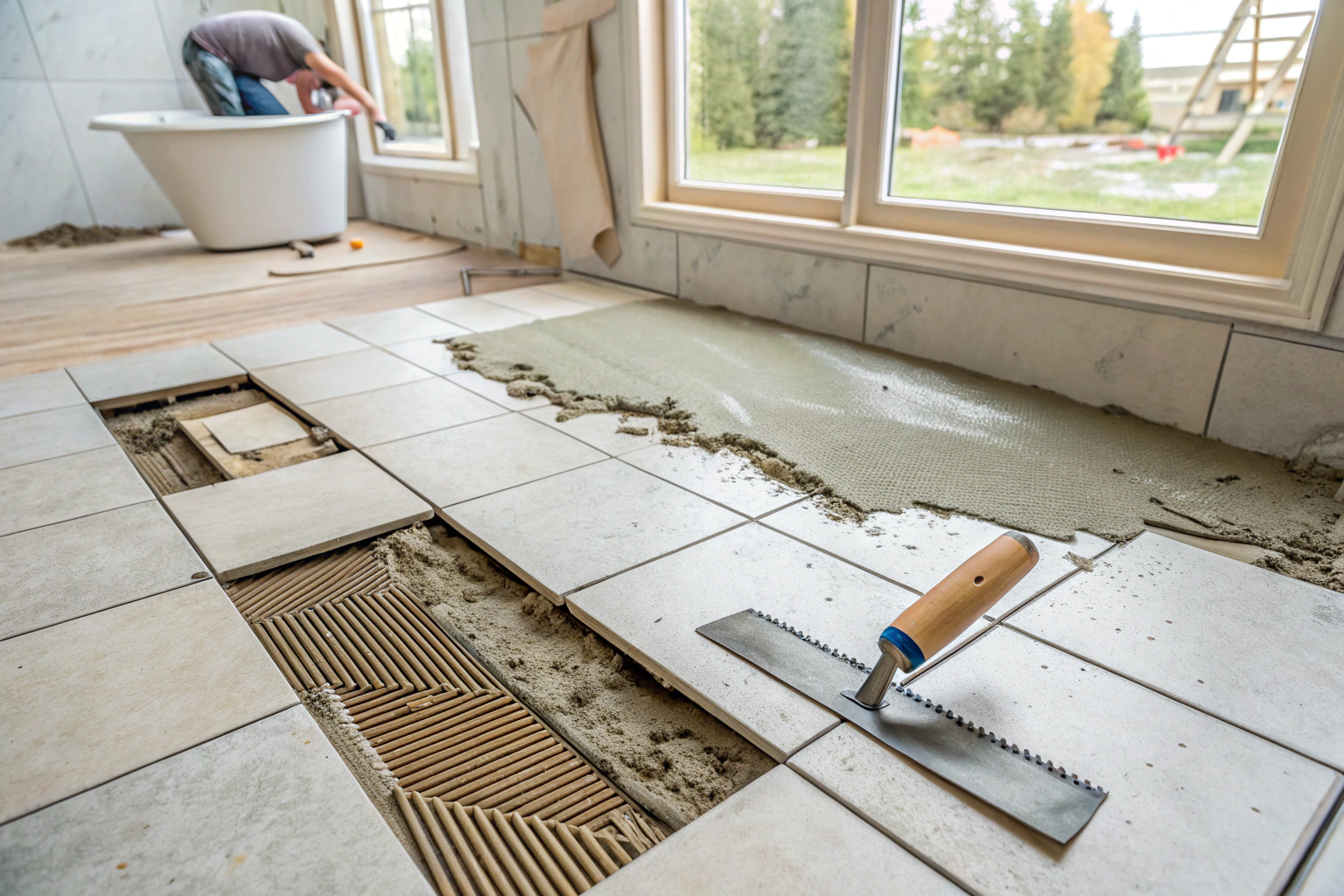
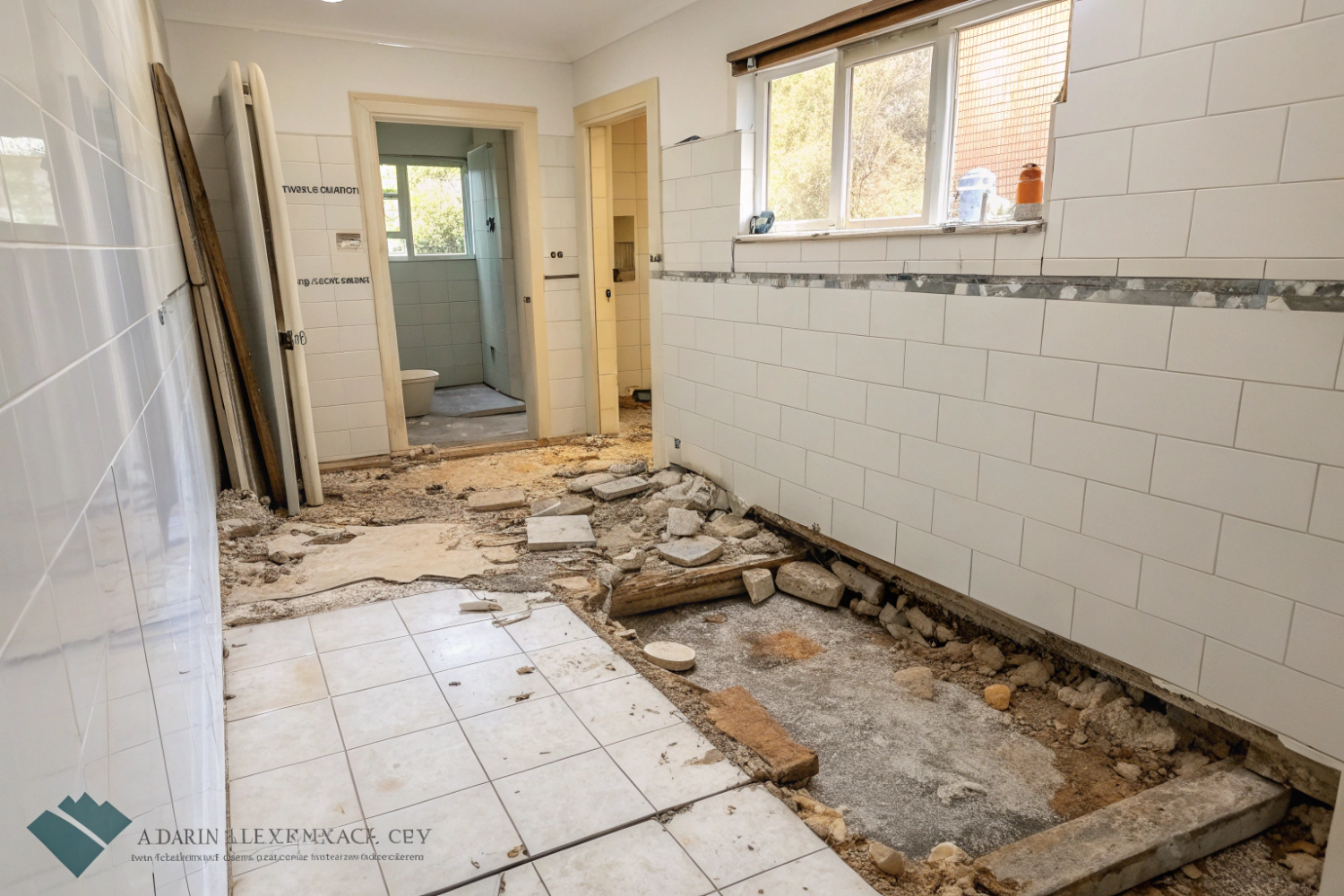
The longevity of a replacement floor is determined well before the first new tile is laid. Once existing tiles and adhesive are stripped back, the substrate beneath is exposed in its true condition — and what is found at that point shapes everything that follows. A new tile installation bonded to a poorly prepared substrate will replicate the same failure pattern as the floor it replaced, often within a fraction of the original lifespan.
Our substrate assessment and preparation process covers:
- Surface laitance ground back to expose a clean, open bonding surface on concrete slabs
- Previous patch repairs assessed for soundness and re-treated where necessary
- Moisture levels tested in ground-bearing slabs before adhesive selection is finalised
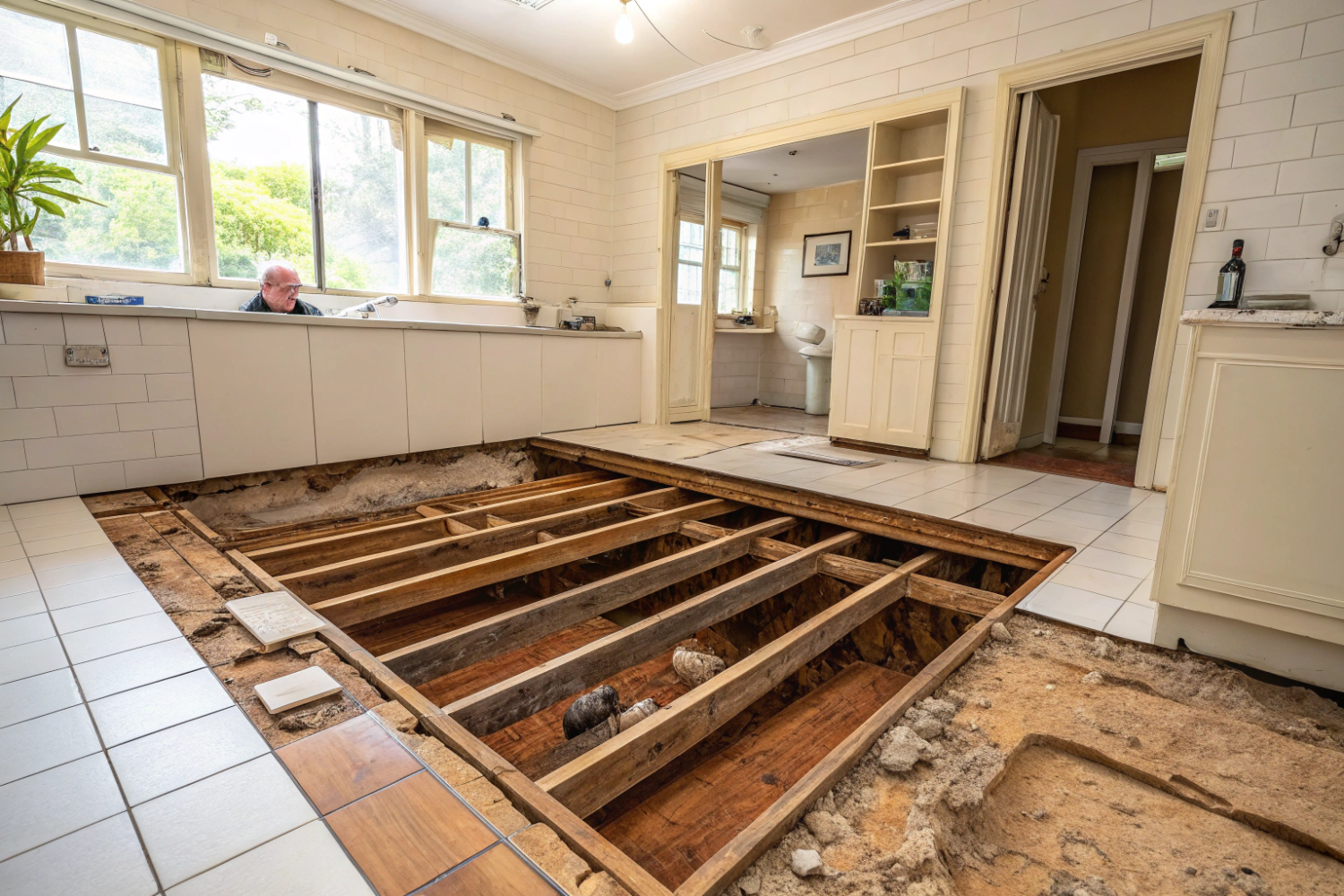
- Timber subfloor stiffness evaluated against deflection tolerances that affect long-term tile bond
- Floor flatness checked against AS 3958 tolerances and built up or ground back where required
- Waterproofing membrane condition assessed in wet areas before any new material is applied
Every one of these steps directly affects how the finished floor performs under daily use. A replacement floor laid onto a correctly prepared substrate — with the right adhesive selected for the substrate type and conditions present — bonds properly, flexes appropriately, and resists the same moisture and movement forces that compromised the original installation. Substrate preparation is not a preliminary step. It is the foundation the entire replacement floor is built on.

FAQ — Floor Tile Replacement Wollongong
Tiles that sound hollow when tapped, move underfoot, or show cracking across multiple areas have typically lost adhesive bond. At that point replacement addresses the actual cause rather than the visible symptom.
Partial replacement is a legitimate scope of work where damage is confined to a defined zone. The key consideration is whether matching tiles are available and whether the surrounding floor is in sound condition.
For Wollongong properties built before 1990, asbestos awareness protocols apply before mechanical removal commences. Floor tile adhesive from this era commonly contained asbestos and must be assessed prior to strip-out.
In most strip-out scenarios the existing membrane is damaged during tile removal and must be fully reapplied to AS 3740 standards before new tiles are laid. Rewaterproofing is standard, not optional.
Domestic bathroom floors require a minimum P4 slip rating under AS 4586. We confirm the slip rating of every tile selected for a wet area floor replacement before it is specified.
A full bathroom floor retile typically spans several days across strip-out, substrate preparation, waterproofing, tiling, and grouting phases. Exact timeframes depend on floor area, substrate condition, and drying requirements between stages.
Ready for a Free Floor Assessment and Replacement Quote?
Floor tile replacement across Wollongong and the Illawarra starts with an honest assessment of what your floor actually needs — whether that’s a partial replacement across a damaged zone or a full retile from substrate up. We cover all room types, all substrate conditions, and all compliance requirements including waterproofing and slip resistance for wet areas.
Homeowners across Thirroul, Corrimal, Bulli, Woonona, Fairy Meadow, and surrounding Illawarra suburbs are welcome to get in touch for a free on-site floor assessment and replacement quote. We assess the condition of your existing floor, identify what the job actually involves, and provide a clear scope of work before anything is committed to.
Call us today or submit an enquiry online. A replacement floor done properly — with correct substrate preparation and the right tile selection — looks better, performs better, and lasts significantly longer than the one it replaced.
