
What Causes Tiled Floor Failure in Wollongong Homes
Tiled floor failure in Wollongong and Illawarra homes follows predictable patterns — and knowing which pattern applies to a specific floor is what separates a lasting repair from one that fails again inside a year.
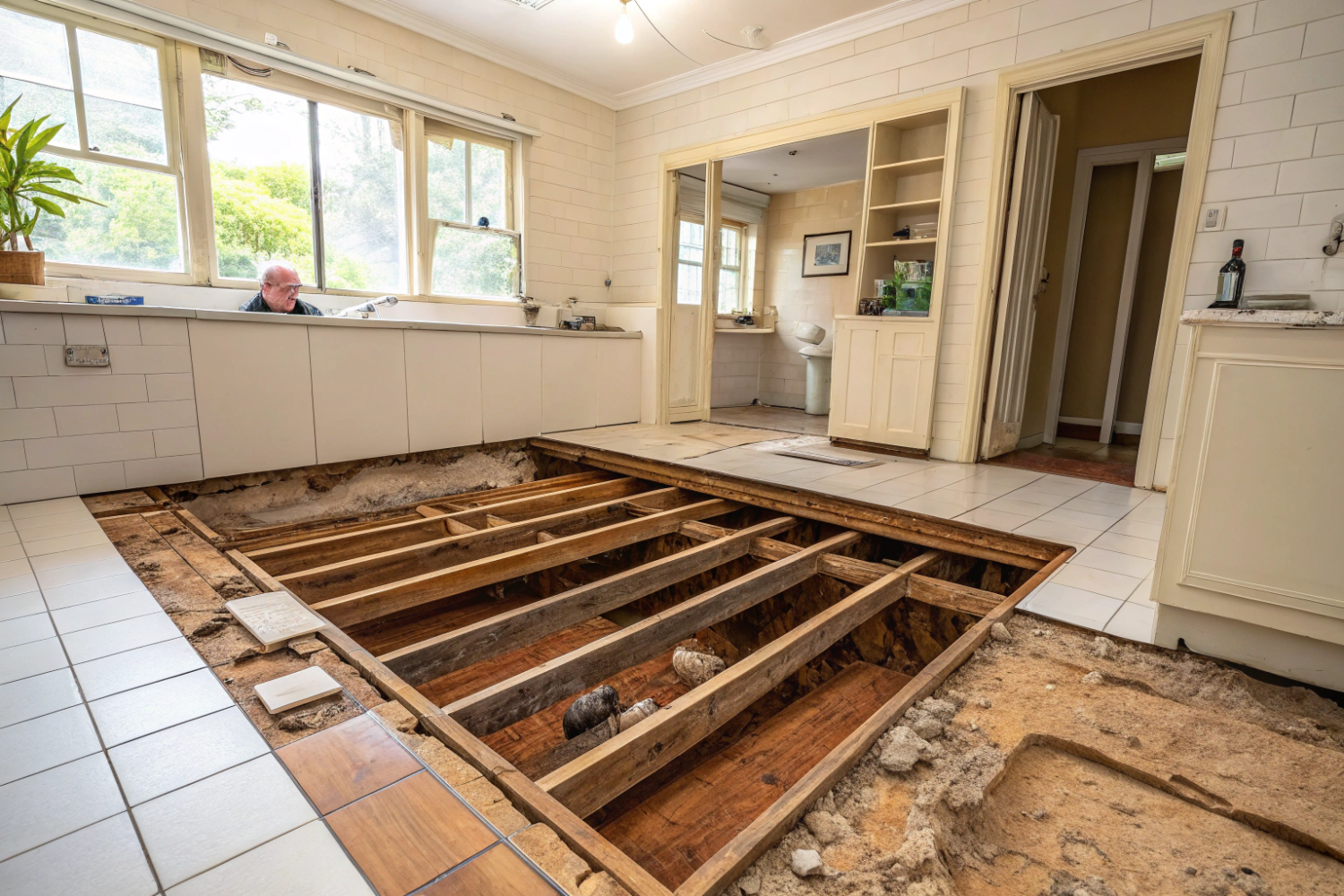
Timber subfloor movement is one of the most common causes across older homes in suburbs like Unanderra and Corrimal, where inadequate subfloor stiffening allows the floor to flex under load and progressively break down the adhesive bond between tile and substrate. Concrete slab movement at control joints or existing crack lines telegraphs directly through the tile layer, cracking tiles and grout along consistent lines. Adhesive failure from incorrect product selection or insufficient coverage at the time of original installation means the bond was never adequate to begin with.
In wet areas, waterproofing deterioration allows moisture to undermine the adhesive layer from below — a failure mode that compounds over time if left unaddressed. In outdoor tiled areas, thermal movement between tile and substrate without adequate expansion joints generates progressive stress that eventually cracks or lifts the tile surface.

How We Assess a Damaged Tiled Floor
Before any repair work begins, we carry out a thorough assessment of the affected floor to define the correct scope and identify the underlying cause of failure. The assessment process covers several key areas.
We sound the floor by tapping systematically across the surface — hollow sections produce a distinctly different tone to well-bonded tiles, and mapping the hollow areas tells us how far the adhesive failure extends beyond the visible damage. We analyse crack patterns to distinguish point impact damage from substrate movement — a single cracked tile from a dropped object looks very different from a diagonal crack line running consistently across multiple tiles.
We inspect grout joint consistency across the floor for signs of differential movement, check transition points and perimeter expansion joints for compression failure, and in wet areas, assess whether moisture is actively contributing to the adhesive breakdown beneath the tile layer. Only once the full picture is clear do we scope the repair — so nothing gets missed and nothing gets fixed twice.
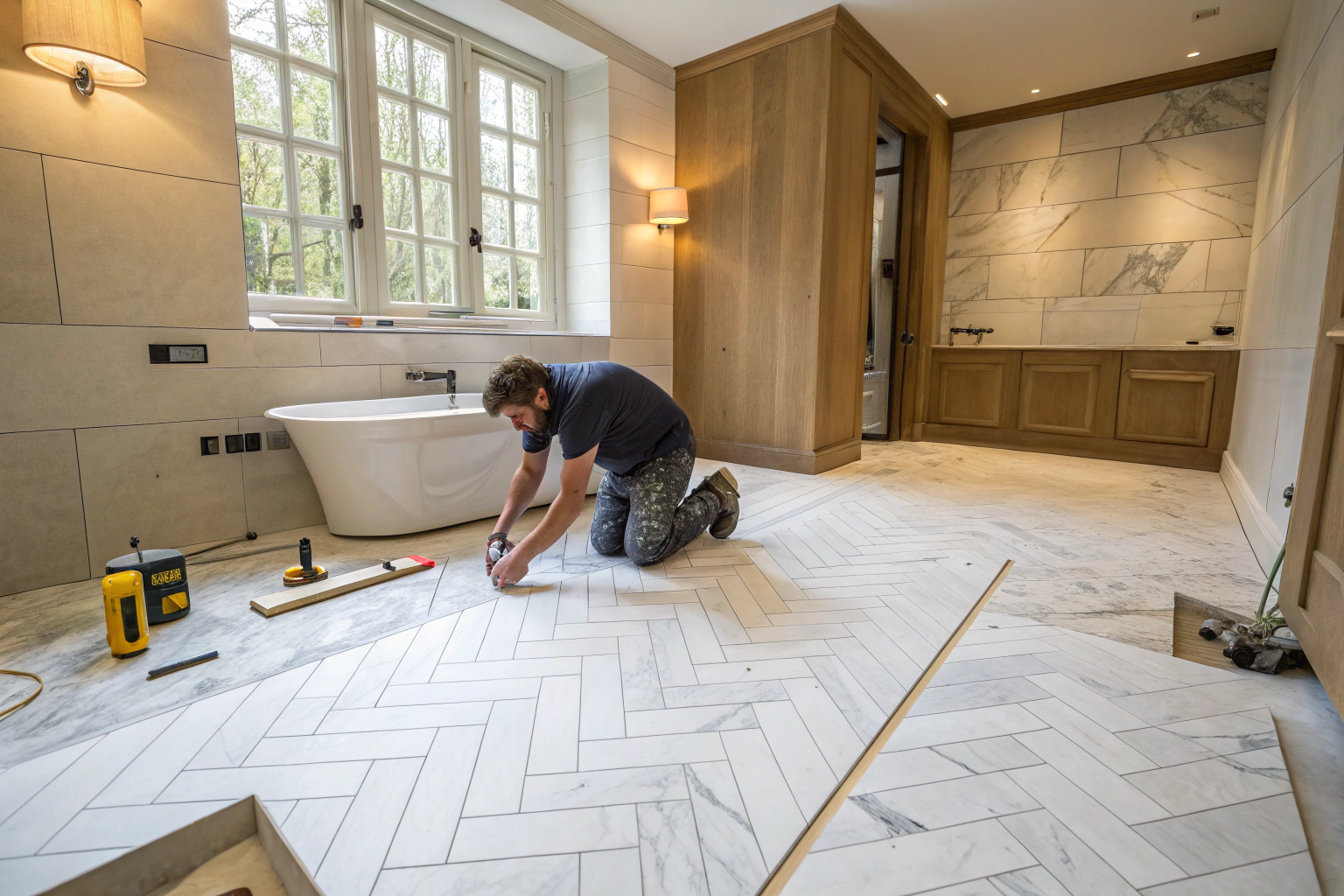
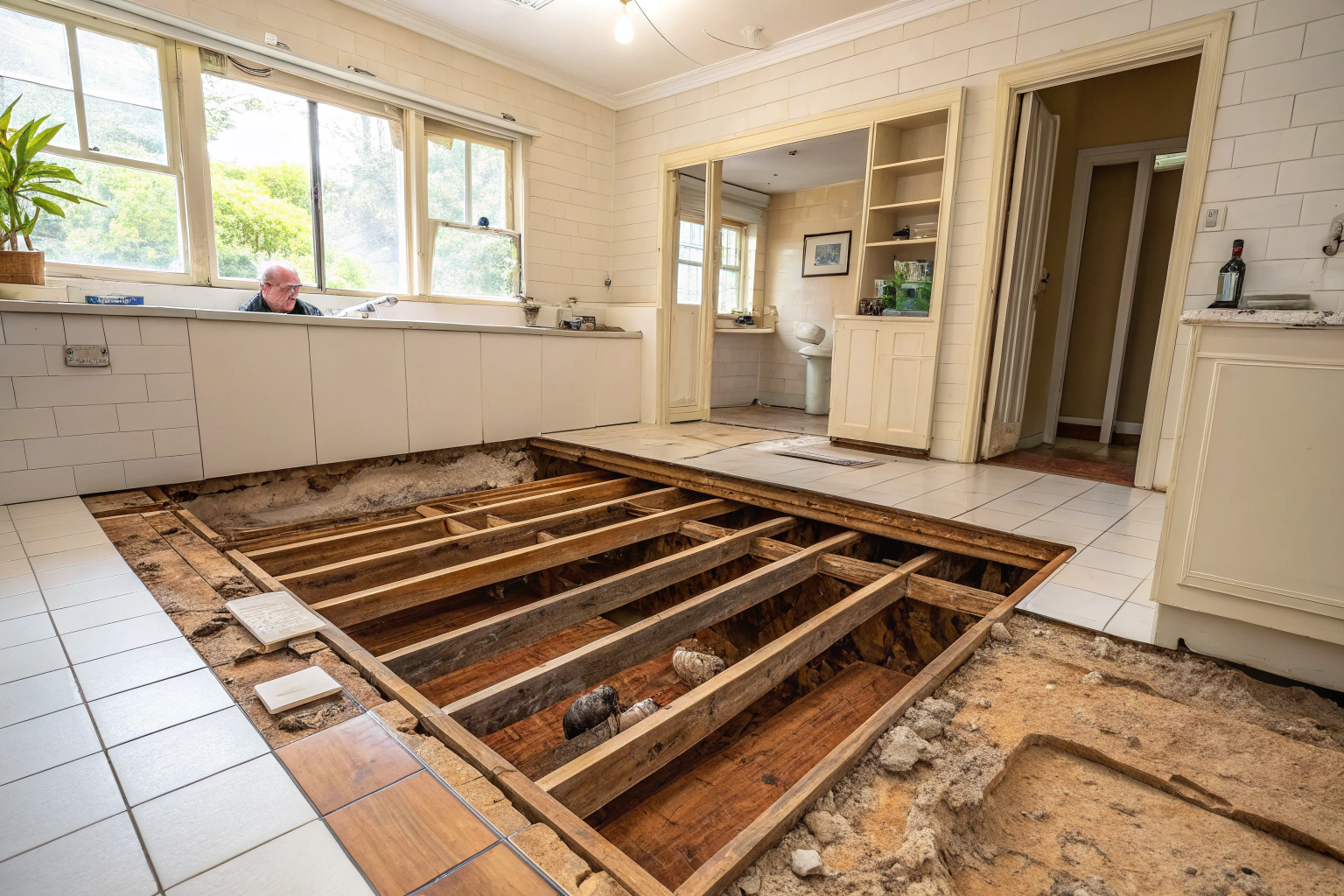
A single cracked tile from a dropped tool or heavy object is the most straightforward tiled floor repair scenario — but straightforward does not mean rushed. The process still requires care and precision to avoid creating additional damage in the process of fixing the original.
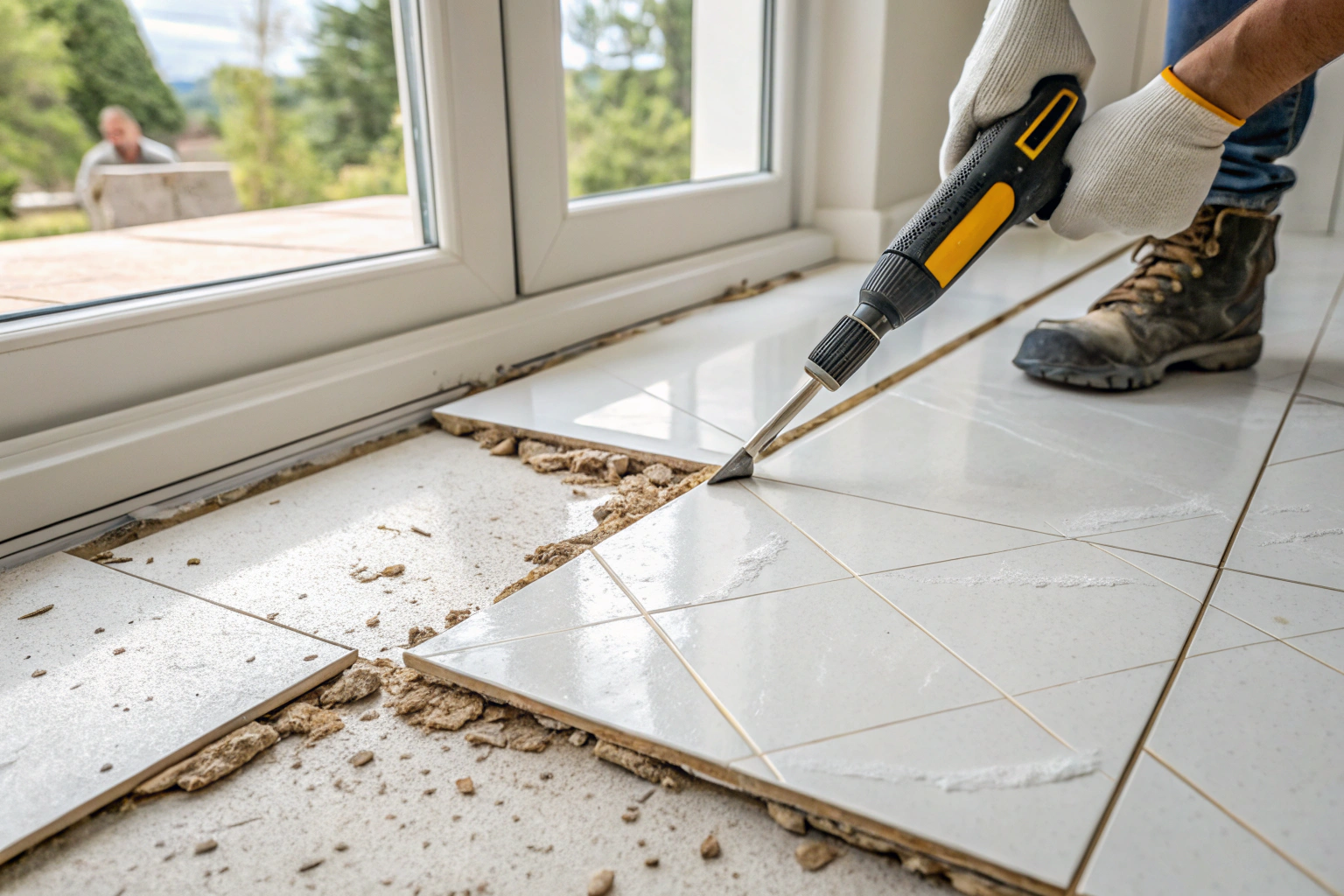
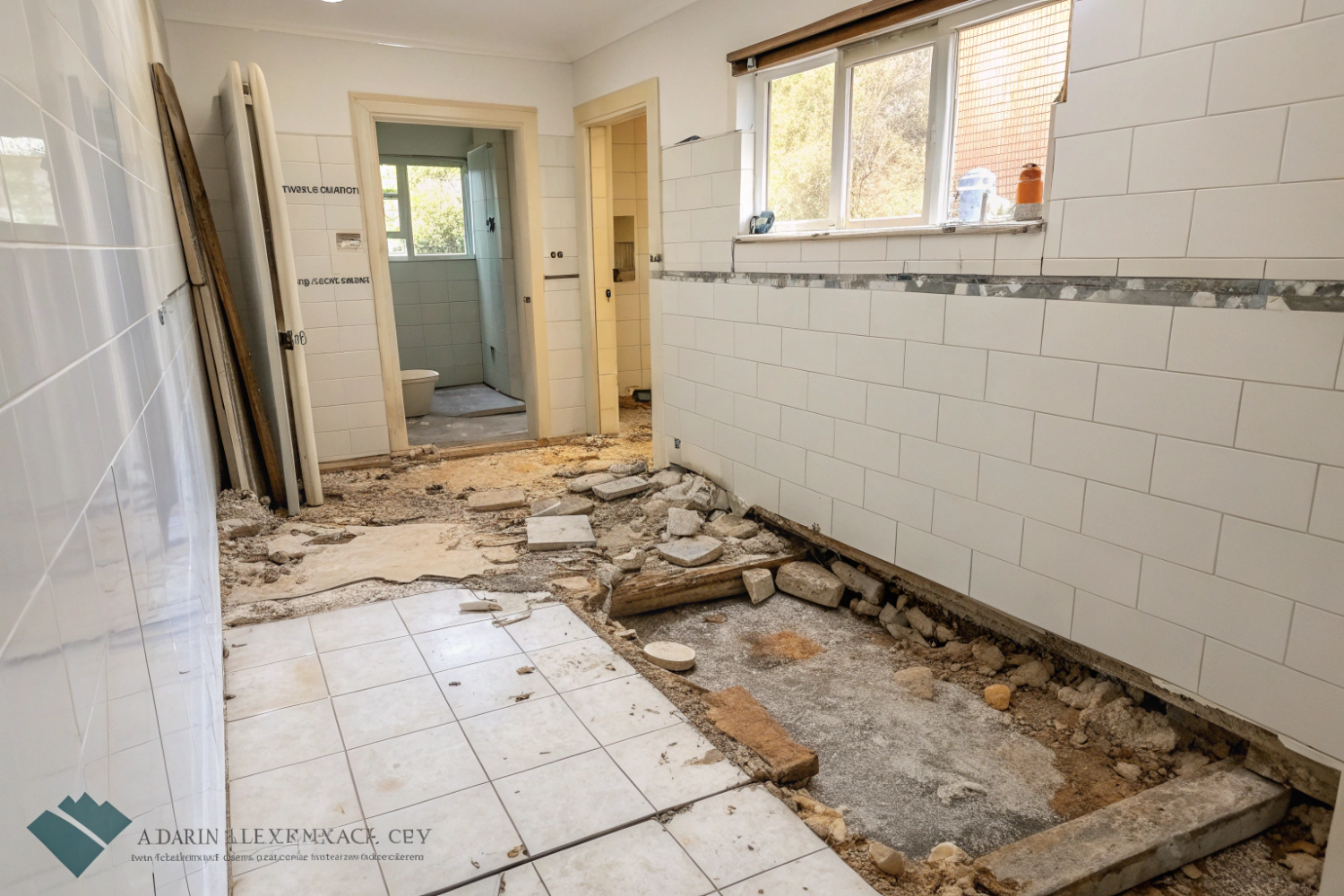
We begin by scoring and removing the damaged tile without disturbing the adhesive bond of the surrounding tiles — a step that requires the right tools and a methodical approach, particularly on older floors where grout joints are narrow, or tiles are brittle. Once the damaged tile is out, we inspect the substrate beneath for any cracking, deterioration, or moisture ingress that the impact may have exposed or contributed to.
With the substrate confirmed sound, we re-bed a matching replacement tile using the correct adhesive for the substrate type, grout to match the existing floor, and allow full cure before the area is returned to use. The goal is a repair that is invisible in the finished floor — and one that holds.
Tiles Lifting Around the Shower Base or Bath — What It Means
Tiles lifting at the perimeter of a shower base or bath are one of the more telling failure signs on a bathroom floor — and the location is not coincidental. These are the highest moisture-exposure zones on the floor, and lifting tiles in these areas almost always indicates that water has been working its way beneath the tile layer for some time.
The most common causes are failed or missing silicone at the junction between the shower base or bath and the adjoining tile field, compression failure at the perimeter expansion joint, or waterproofing membrane deterioration directly beneath the wet zone. In each case, the lifting tile is the visible result of an adhesive bond that moisture has progressively undermined.
Relaying the lifted tiles without addressing the silicone joint, expansion joint, or membrane condition beneath guarantees the same outcome. We identify the source before any tile is re-bedded — and the repair addresses the cause, not just the lift.
Grout Failure on Bathroom Floors — When to Repair and When to Regrout
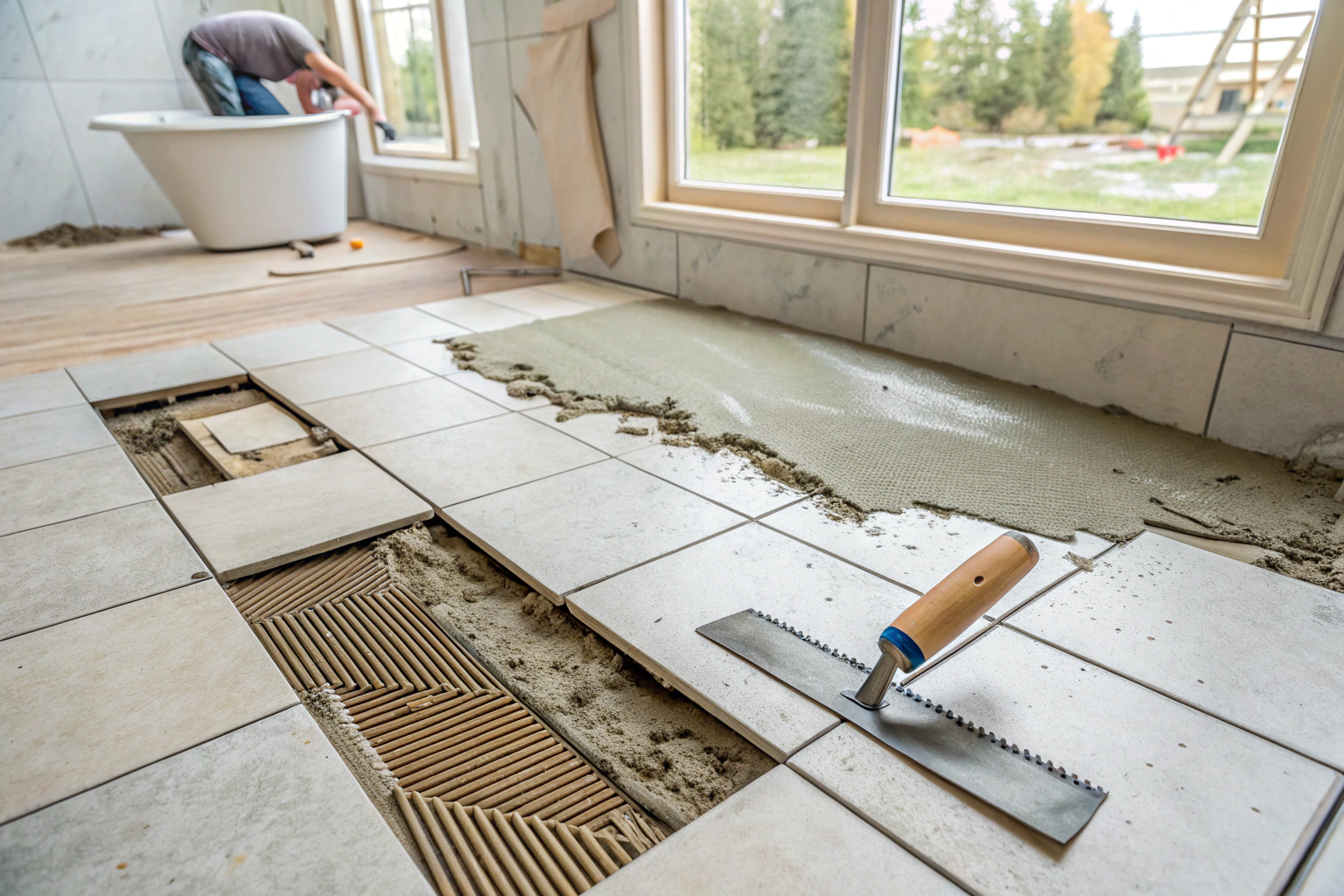
Grout failure on a bathroom floor is one of those issues that looks minor on the surface but carries real implications for what’s happening beneath. Cracked, crumbling, or separating grout joints in a wet area are not just a cosmetic problem — they are an open pathway for water to reach the waterproofing membrane and adhesive layer below.
The distinction between spot grout repair and full regrout comes down to cause. Where grout has deteriorated in isolated joints from age or cleaning product exposure, targeted regrouting of the affected joints is a sound and lasting fix. Where grout is cracking along consistent lines across the floor — particularly diagonal patterns or linear cracks running through multiple joints — the cause is substrate movement beneath, and regrouting alone will not hold. The new grout will crack again along the same lines within months.
We assess the crack pattern before recommending any grout repair scope — because the grout is telling us something about the floor, and that information shapes the correct repair path.
What a Professional Bathroom Floor Tile Repair Includes
A professional bathroom floor tile repair in Wollongong covers significantly more than removing a damaged tile and pressing a new one into place. The repair scope is defined by the assessment findings, and a thorough repair addresses every layer of the floor system that has been compromised, not just the visible surface.
Depending on the failure type and extent, a complete bathroom floor tile repair includes:
- Full diagnostic assessment — sounding, crack pattern analysis, and moisture checking before any work is scoped
- Careful tile removal across the affected area without disturbing the surrounding tiles
- Substrate inspection and preparation — including subfloor condition assessment in timber-framed homes
- Waterproofing assessment and repair where the membrane beneath the tile layer is found to be compromised
- Correct adhesive selection and application matched to the substrate type, tile format, and wet area conditions
- Tile re-bedding and grouting finished to match the existing floor
- Silicone joint renewal at perimeters, shower bases, and bath junctions where required
Every step in that sequence exists for a reason — and skipping any one of them is how a bathroom floor tile repair becomes a repeat job.

FAQ — Bathroom Floor Tile Repair Wollongong
If damage is isolated to a small area and the surrounding tiles are well-bonded, repair is likely the right path. Widespread hollow tiles or systematic adhesive failure across the whole floor point toward a full retile.
The most common causes are point impact damage, substrate movement beneath the tile layer, adhesive failure from incorrect product selection, and thermal or moisture-related stress in wet areas. Crack pattern analysis during assessment identifies which applies.
A hollow sound indicates the adhesive bond between the tile and substrate has broken down. The tile is no longer fully supported from beneath, which creates flex underfoot and accelerates further cracking or lifting.
We sound the full floor to map the hollow area accurately. Only de-bonded tiles are removed and re-bedded — sound tiles outside the affected zone are left undisturbed wherever the repair scope allows.
Yes. Waterproofing integrity is assessed on every bathroom floor repair job. Where the membrane is found to be compromised or inadequate, we define the full scope before proceeding — including any subfloor remediation required.
Most isolated bathroom floor tile repairs complete within one to two days. Larger repairs involving waterproofing work or subfloor remediation take longer. We provide a clear timeline as part of the repair quote.
Get a Free Bathroom Floor Tile Repair Quote in Wollongong
Wollongong and Illawarra homeowners dealing with cracked, hollow, or lifting bathroom floor tiles are welcome to get in touch for a free on-site assessment and repair quote. We service Fairy Meadow, Corrimal, Thirroul, Dapto, Unanderra, Warrawong, and all surrounding Illawarra suburbs.
Our licensed tilers carry out a full diagnostic assessment before any repair is scoped — identifying the underlying cause of the failure, the condition of the waterproofing membrane, and the true extent of any adhesive breakdown beneath the surface. What we quote is based on what the floor actually needs.
A bathroom floor tile repair done properly addresses the cause, not just the symptom. That is the only repair worth paying for — and it is the only kind we carry out. Contact us today for your free quote.
